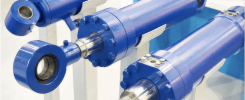
Working with a stable induction hardened chrome bar supplier directly impacts the service life of your hydraulic cylinders, construction machinery and lifting equipment.
Many overseas buyers face the same frustrating situation: multiple Chinese suppliers offer widely different quotations for induction hardened chrome bar. Unfortunately, sample quality often cannot represent mass production consistency.
Without clear screening criteria, you risk unstable hardening depth, premature chrome layer peeling, dimension deformation and costly overseas rework.
This guide covers practical, industry-insider advice to help you filter qualified induction hardened chrome bar manufacturers and avoid common sourcing traps.
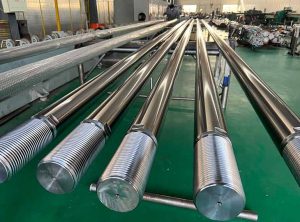
1. Confirm whether the factory owns in-house induction hardening production lines
Most metal processing workshops can provide chrome plating service, but not every factory runs independent induction hardening equipment.
A large number of middlemen and small-scale outsourcers send raw steel bars to third-party heat treatment vendors for quenching.
Outsourced heat treatment brings unavoidable risks: inconsistent heating parameters, unstable effective hardening depth, uncontrollable lead times and zero complete quality traceability.
When evaluating an induction hardened chrome bar manufacturer, do not only check their chrome plating workshop. Request photos, workshop videos and production records of induction quenching machines.
Only manufacturers with integrated induction hardening, grinding and chrome plating workshops can guarantee consistent quality batch after batch.

2. Verify the correct production process sequence
This is one of the most overlooked technical traps for global buyers.
Some suppliers falsely label regular chrome bars as induction hardened chrome bar, or reverse the manufacturing sequence to cut costs.
The correct standard flow:
Raw material cutting → Rough grinding → Induction hardening → Stress relief → Precision grinding → Hard chrome plating → Finish polishing
Raw material cutting → Rough grinding → Induction hardening → Stress relief → Precision grinding → Hard chrome plating → Finish polishing
If induction hardening is carried out after chrome plating, high quenching temperature will create invisible microcracks inside the chrome layer.
Under continuous reciprocating movement inside hydraulic cylinders, the coating will peel off far ahead of expected service life. Always confirm the full processing sequence with your manufacturer before placing formal orders.
3. Focus on effective hardening depth, not only surface HRC hardness
Buyers often request surface hardness certificates as the major quality standard. However, two induction hardened chrome bar samples with identical surface hardness values can perform completely differently in the field.
Surface hardness is easy to adjust. The real factor determining wear resistance and fatigue performance is effective hardening depth.
Many factories only create an extremely thin hardened surface layer to pass hardness tests. Once the thin layer wears away, the base steel loses wear resistance rapidly.
Make it a rule to ask potential manufacturers for hardening depth test reports. Reliable induction hardened chrome bar manufacturers can provide test data matching your required working pressure and cycle conditions.
4. Lock substrate material grade in your contract
Hidden material downgrade is a common cost-cutting tactic in the industry.
Ordinary 45# steel is occasionally used to replace 42CrMo for low-price induction hardened chrome bar.
Under heavy load, frequent impact or high-pressure hydraulic working environments, 45# steel piston rods suffer bending fatigue failure quickly.
42CrMo alloy steel remains the mainstream substrate material for high-pressure hydraulic induction hardened chrome bar.
For overseas shipments, return logistics cost is extremely high. Clearly specify material grade in quotations and formal contracts to avoid unexpected failures after delivery.
5. Check thermal deformation control capability for long-length rods
Induction hardening generates intense local heat and inevitably causes thermal deformation. Factories without professional straightening equipment can only produce short standard-size induction hardened chrome bar.
If you require customized long rods for wind power pitching cylinders, offshore hydraulic equipment or large construction machinery, geometric tolerance including straightness and roundness becomes critical.
Ask manufacturers to explain their post-quenching straightening process and request tolerance test records for long-length finished rods. Poor straightness will accelerate seal abrasion and cause hydraulic oil leakage.
6. Distinguish sample-focused workshops from mass-production manufacturers
It is not difficult for small workshops to produce perfect induction hardened chrome bar samples. The real challenge is maintaining stable quality during continuous mass production.
Small facilities often struggle to keep consistent heating cycles, plating thickness and grinding precision for bulk orders.
For long-term cooperation, avoid judging suppliers solely based on pre-production samples. Arrange random production inspections during mass manufacturing.
Reliable induction hardened chrome bar manufacturers maintain unified production standards from the first piece to the last container.
Essential Checklist to Verify Your Induction Hardened Chrome Bar Manufacturer
- Own induction hardening equipment or fully outsource all heat treatment?
- Can they provide hardening depth inspection reports upon request?
- Confirm the full processing flow and avoid reversed hardening & chrome plating steps
- Confirm base material grade and add material clauses in sales contracts
- Are they capable of straightening long rods after induction quenching?
- Can they provide batch quality records for previous export orders?
- What test standards do they follow for roundness, straightness and chrome thickness?
Conclusion
Choosing a reliable induction hardened chrome bar manufacturer in China is not only about comparing unit prices.
Technical capacity, complete production workflow, quality inspection standards and batch consistency decide your long-term operational cost.
A manufacturer with integrated production lines, transparent testing standards and rich experience supplying hydraulic cylinder exporters will help you reduce after-sales failure risks and deliver stable finished equipment to your end customers.
If you need custom-size induction hardened chrome bar for hydraulic cylinder applications, contact our team to discuss your technical requirements.
Reference Resources
For more technical background on piston rod surface treatment and heat treatment requirements for hydraulic applications, you can check these professional industry guidelines:
Hard Chrome Plating Technical Guidelines for Hydraulic Components
Induction Hardening Specifications for Alloy Steel Shafts
Hard Chrome Plating Technical Guidelines for Hydraulic Components
Induction Hardening Specifications for Alloy Steel Shafts